
Meet the experts shaping the future of digital health and care. Our Judges Spotlight series showcases the vision and insight of the HSJ Digital Awards judging panel - leaders driving innovation, transformation and lasting impact across the NHS.
Discover Emily Wells, Chief Nursing Information Officer & Deputy CCIO, Norfolk and Norwich University Hospitals NHS Foundation Trust, experience and advice for this year’s entrants below.
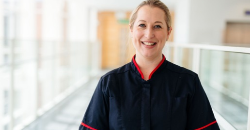
Tell us about yourself - what inspired you to get involved in digital health?
Like a lot of nurses, I fell into digital rather than setting out to have a career in it. I was a Surgical Matron and became more and more involved in our EPR programme, initially representing nursing and helping to shape how the system would work in practice.
I found I really enjoyed being the bridge between clinical and technical teams. I could see what both sides were trying to achieve and often found myself asking the questions that helped us get to what clinicians actually needed, rather than simply what the technology could do.
When I was offered the opportunity to move into digital full time, I was nervous about leaving a traditional clinical and operational role. But I really wanted the EPR programme to succeed because I could see the difference it could make for our patients and staff.
I took the jump and haven't looked back. I have been involved in digital transformation in some capacity for around 15 years, moving into digital full time in 2016 and becoming a CNIO six years ago. I am now working on my second major EPR programme and, over the years, have had the opportunity to deliver digital change as part of large multidisciplinary teams as well as leading individual projects.
From your experience in digital transformation, what approaches have made a lasting impact in health and care?
Implementing technology is often the easy bit. Getting people to trust it, use it and then make the most of what it can do is much harder.
For me, that starts with involving the people who are actually going to use it. You need clinical ownership, but you also need people to feel listened to and to trust that when they tell you something isn't working, you will do something about it.
And it doesn't stop at go-live. In many ways that is when the real work starts. Once people are using a system every day, you can see what works well, what doesn't, and where there are opportunities to make things better.
That is why optimisation is so important. There is little point investing in technology and then leaving it largely as it was on day one. The real value comes from continuing to learn, improve and make better use of what you have.
What digital innovation or trend are you most excited to see influencing the NHS in the next few years?
It has to be AI. I use it regularly myself and I think the potential is huge. There are so many areas where it could make things easier for staff, reduce some of the administrative burden and ultimately give clinicians more time with patients.
I am probably equally excited and cautious about it, though. There is such enthusiasm around AI at the moment that there is a risk we rush to implement it without fully thinking through the consequences.
One thing that particularly concerns me is how convincing AI can sound, even when it is wrong. We can't lose our willingness to question, challenge and use our own clinical judgement just because technology has given us an answer.
I absolutely don't want us to be frightened of AI, but we do need the right clinical safety, governance and assurance around it. If we get that balance right, I think the opportunities for the NHS are enormous.
What have you learned from your time on the HSJ Digital Awards judging panel?
This is actually my first year judging the HSJ Digital Awards, so I'm looking forward to experiencing the awards from a completely different perspective.
I've previously attended the HSJ Awards as both a winner and as part of shortlisted teams, so I know how much work sits behind an entry and what recognition can mean to the people involved.
One of the reasons I was keen to join the judging panel was the opportunity to see what other teams across the NHS are doing. There is so much good digital work happening across health and care, and we don't always get the opportunity to look beyond our own organisations and learn from it.
I'm particularly looking forward to seeing the different approaches organisations have taken to EPR optimisation, recognising some of the teams behind that work, and hopefully taking away learning and ideas myself.
What one piece of advice would you give to teams preparing their entries to help their work stand out?
Don't just tell us what you implemented. Tell us what changed because of it.
Particularly in EPR optimisation, I want to understand the problem you were trying to solve and why it mattered. What was the experience for patients or staff before? What did you change? And, most importantly, what difference did it actually make?
Evidence that impact wherever you can, whether that is improved safety, better patient or staff experience, reduced duplication, time released back to clinical care or a more effective workflow.
I also wouldn't be afraid to talk about what didn't go perfectly. Digital transformation rarely follows a completely straight path, and demonstrating how you listened, adapted and learned can be just as powerful as presenting the final outcome.
For me, the strongest entries will make the technology almost secondary. The story I want to remember is the difference it made to patients, staff and the delivery of care.